
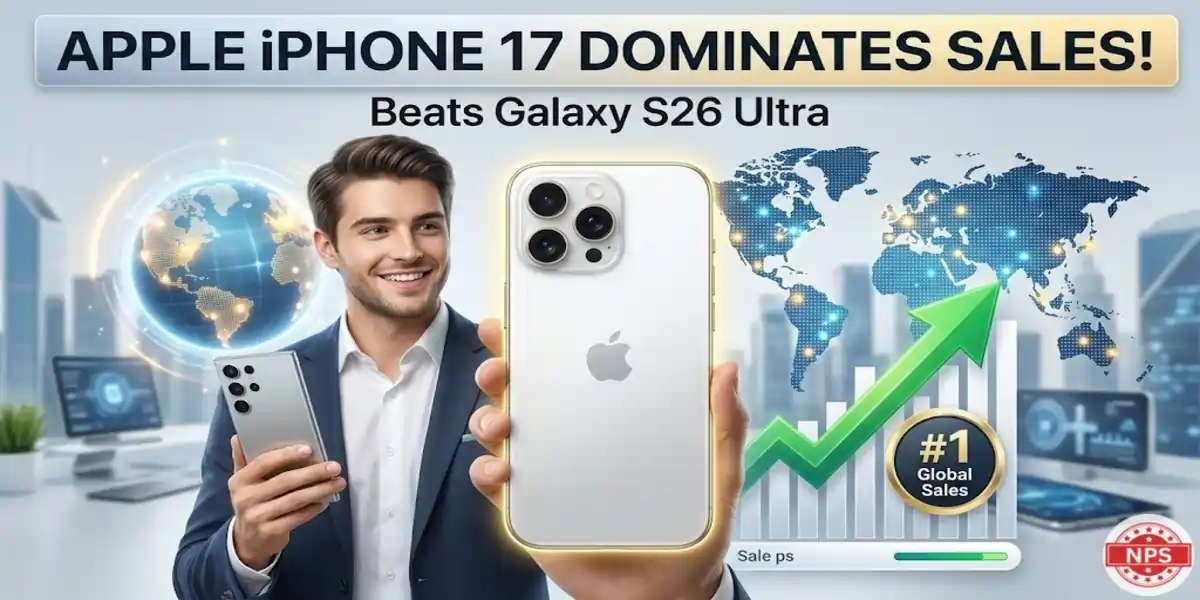
In the fast-paced world of mobile technology, tech journalists and power users often get blinded by the glow of ultra-high-end flagships. We spend countless hours obsessing over the Smart Phone features of the iPhone 17 Pro Max or the Samsung Galaxy S26 Ultra. Yet, when we look at the cold, hard sales data, the reality is often much humbler. At the end of the first quarter of 2026, the device topping the global charts isn’t the most expensive “Ultra” or “Pro” model—it is the standard, more accessible iPhone 17.
This trend isn’t just a global phenomenon; it is mirrored across six of the world’s eight largest mobile markets. While the high-end flagships hold their own in specific niches, the base iPhone 17 has managed to eclipse its more premium rivals, establishing itself as the quintessential Smart Phone for the masses in March 2026.
The Battle for Dominance: US, Germany, and France
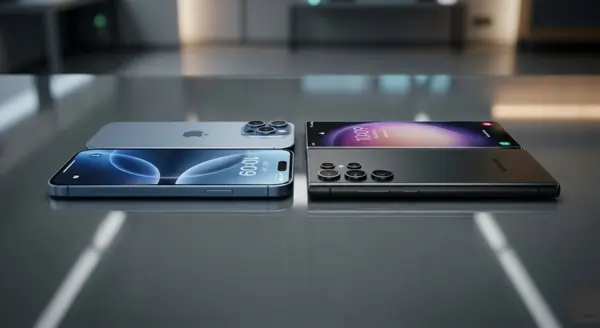
In the United States, Germany, and France, the race for the title of the best-selling Smart Phone is incredibly tight. Because the iPhone 17 didn’t maintain a massive technological advantage over the 17 Pro Max during the January-March window, the two devices are virtually neck-and-neck in the American market.
However, the “vanilla” iPhone 17 holds a strategic edge. In Germany and France, the smaller Pro model settles for the third spot, while the base iPhone 17 secures the top position. Meanwhile, the Samsung Galaxy S26 Ultra maintains a strong presence as the third-most popular Smart Phone in the US, but it still struggles to unseat the sheer popularity of the base Apple models.
Changing Preferences: Entry-Level Androids vs. Premium Flagships
It is fascinating to see how the bottom of the top-five lists look in various countries. In the US, the entry-level Samsung Galaxy A17 5G is the fifth most popular device, proving that there is still a massive audience looking for humbler specs and lower price points in a Smart Phone.
In France, the Galaxy A16 5G claims the fifth spot, trailing behind last year’s standard Galaxy S25. This suggests that while Apple fans are upgrading to the latest models, Samsung users are often more inclined toward mid-range or previous-generation value. Germany, on the other hand, presents a different story: the top five is an Apple-exclusive club, with older models like the iPhone 16 and 17e holding firm behind the latest releases, effectively pushing all Android devices out of the top rankings.
Market Leadership in India, the UK, and Japan
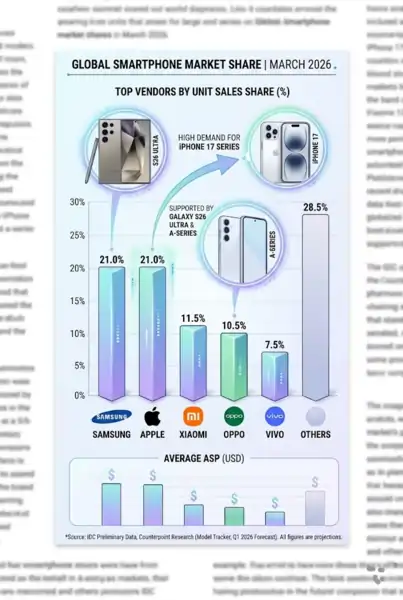
You might not expect India, the UK, and Japan to share much in common, but their smartphone sales data tells a similar story. In all three markets, the iPhone 17 maintains a comfortable lead over its competitors.
- India: Despite the massive market size and the popularity of budget devices like the Oppo A6X and Vivo Y19S, the iPhone 17 continues to capture significant interest.
- Japan and UK: In these markets, Apple’s hold is even tighter. In the UK, the iPhone 17 beats the Pro models by a significant percentage, while in Japan, the iPhone 17e also ranks among the most successful devices.
Holding a 29% market share in the UK or a 25% slice in Japan is no small feat for a non-Pro Smart Phone. It proves that the “average” user is prioritizing reliability, brand ecosystem, and software support over niche camera capabilities.
The Samsung Stronghold: South Korea
If there is one place where the Galaxy S26 Ultra remains unchallenged, it is South Korea. Here, Samsung’s latest “crown jewel” isn’t just winning—it is dominating. The S26 Ultra accounted for a staggering 43% of all Smart Phone sales in its home market in March 2026.
The base Galaxy S26 had to settle for a 12% share. This demonstrates that domestic brand loyalty remains a massive factor in smartphone adoption, a trend that Apple is currently trying to combat globally but finds immense success with in markets like the UK and Japan.
The China Landscape: A Different Playing Field
China remains the world’s largest smartphone market, and the landscape there is uniquely challenging for both Apple and Samsung. While the iPhone 17 Pro Max, 17, and 17 Pro hold a combined 14% share of Chinese sales, the competition from local giants is fierce.
The Honor X70 and Huawei Mate 80 are fighting for the fourth and fifth positions, respectively, capturing 3% and 2% of the market. Most notably, Samsung is nowhere to be found in the top five. This highlights the difficulty for premium foreign brands to penetrate the local Chinese Smart Phone ecosystem, which is increasingly dominated by home-grown innovation and aggressive pricing.
Why the Standard iPhone 17 Wins
Why is the “humble” iPhone 17 the best-selling Smart Phone? The answer is a mix of value and ecosystem.
- Price-to-Performance Ratio: For most users, the Pro-level features—like LiDAR scanners or 5x zoom—are luxuries rather than necessities.
- Software Longevity: Apple’s commitment to five-plus years of OS updates makes even the base model a solid investment.
- Ecosystem Integration: Features like AirDrop, iMessage, and iCloud backup keep users locked into the brand, regardless of whether they buy the base model or the Ultra.
Frequently Asked Questions (FAQs)
Q1: Why is the standard iPhone 17 outselling the Pro models?
The standard iPhone 17 offers the perfect balance of price and features for the average consumer, making it a more attractive Smart Phone for those who don’t need niche professional camera tools.
Q2: Is the Samsung Galaxy S26 Ultra failing globally?
Not at all. While it isn’t the number one best-seller globally, it dominates in South Korea and maintains a strong position among premium buyers in the US and Europe.
Q3: Why is Samsung struggling in the Chinese market?
The Chinese market is heavily saturated with local brands like Huawei, Honor, Xiaomi, and Vivo, which offer premium-like specs at highly competitive price points, making it hard for Samsung to maintain its position.
Q4: Will Android ever overtake Apple in global sales?
While Android as an OS has a larger global market share, Apple consistently wins the “best-selling individual Smart Phone” title because they focus their sales on fewer models compared to the fragmented Android landscape.
Q5: What should I consider before buying a new smartphone in 2026?
Consider your primary use case. If you need a reliable Smart Phone for daily tasks, the base model is usually sufficient. If you are a content creator or a power user, the “Ultra” or “Pro” variants offer the specialized hardware you need.
Final Thoughts: The Road Ahead
As we look toward the remainder of 2026, the dominance of the iPhone 17 sends a clear message: consumers are becoming more value-conscious. While we love to talk about the latest high-end Smart Phone specs, the market rewards accessibility and consistent performance. Whether you are an Android loyalist or an Apple fan, the competition in 2026 is driving innovation that benefits everyone. What are your thoughts on the latest sales data? Will you be upgrading to the latest model this year, or waiting for a bigger leap in technology? Drop a comment below!


