The Indian Automobile landscape is on the brink of a massive transformation, and leading the charge is none other than the country’s largest carmaker, Maruti Suzuki. For decades, Maruti has been the heartbeat of middle-class Indian families, providing reliable, fuel-efficient, and affordable vehicles. However, as the industry shifts toward electrification and premiumization, the company is recalibrating its strategy.
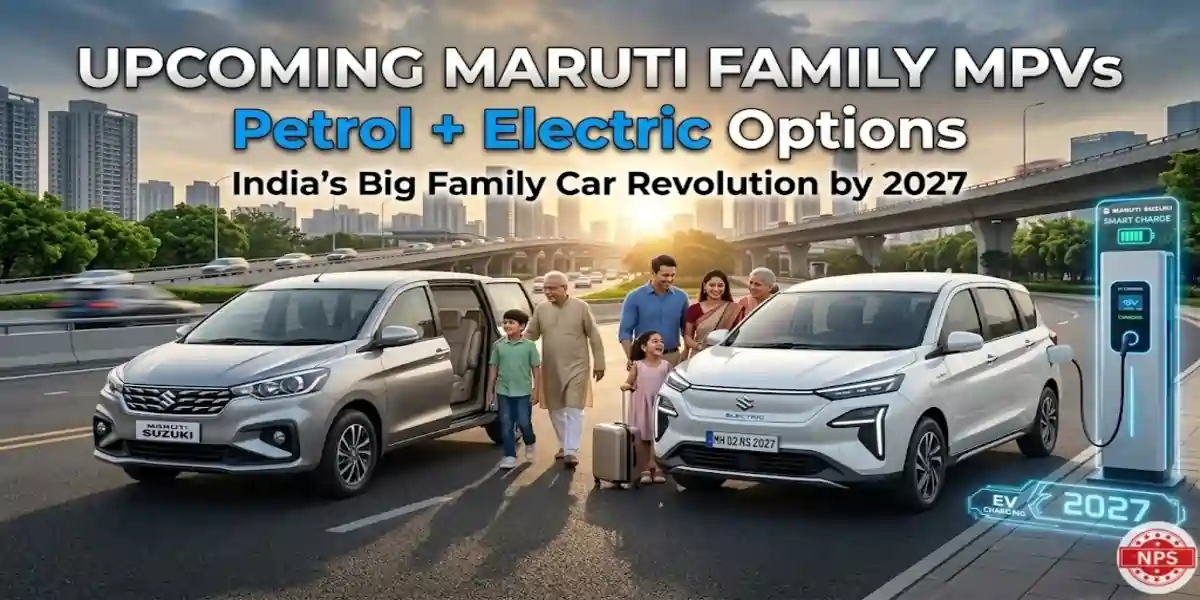
Under its ambitious Vision 3.0 long-term plan, Maruti Suzuki is not just looking to maintain its lead; it is aiming to reclaim a dominant 50% market share in the passenger vehicle segment. To achieve this, the company is preparing a relentless product offensive. By 2027, the Indian Automobile sector will witness the arrival of two brand-new family-oriented People Movers (MPVs). These vehicles, codenamed YMC and YDB, represent the two pillars of Maruti’s future: cutting-edge Electric Vehicle (EV) technology and high-efficiency petrol engines.
Maruti Suzuki’s Vision 3.0: The Blueprint for Dominance
Before we dive into the specific details of the upcoming MPVs, it is essential to understand the framework behind their development. Vision 3.0 is a multifaceted strategy designed to future-proof the brand. In an era where global Automobile players are struggling to balance tradition with innovation, Maruti’s roadmap focuses on:
- Product Portfolio Expansion: Moving beyond entry-level hatchbacks to dominate the SUV and MPV spaces.
- Multi-Powertrain Strategy: Instead of putting all eggs in the EV basket, Maruti is investing in Petrol, CNG, Hybrids, and EVs simultaneously.
- Production and Exports: Increasing local manufacturing capacity to serve both the domestic market and global export hubs.
- Carbon Neutrality: Aligning with India’s goals for a greener future without compromising on vehicle performance.
The upcoming YMC and YDB MPVs are the first significant steps in this journey, catering to the diverse needs of the modern Indian family.
1. Maruti YMC: The First All-Electric Family MPV
The Maruti YMC is perhaps the most anticipated vehicle in the upcoming lineup. As the Automobile world moves toward sustainable energy, a family-sized electric MPV is exactly what the Indian market needs. Families who currently use vehicles like the Ertiga or XL6 but want to transition to green energy have had few affordable options—until now.
Platform and Powertrain
The YMC will be built on a dedicated EV platform. It is widely expected to share its “bones” with the eVitara, Maruti’s flagship electric SUV. This shared architecture ensures that the YMC will benefit from tested and optimized EV technology.
According to industry reports, the YMC will likely offer two battery pack options:
- 49kWh Battery: Ideal for city dwellers and daily commutes.
- 61.1kWh Battery: Designed for highway travel and long family trips.
The top-spec version is expected to deliver a range of up to 543km per charge, effectively eliminating “range anxiety” for most Indian buyers. This is a significant milestone for the Indian Automobile sector, as it brings long-distance electric travel into the family MPV segment.
Dimensions and Features
Measuring approximately 4.5 metres in length, the YMC will offer a spacious three-row cabin. Maruti is expected to load this vehicle with premium features to justify its EV positioning:
- Advanced Infotainment: A large floating touchscreen with wireless smartphone connectivity.
- Safety Tech: Level 2 ADAS (Advanced Driver Assistance Systems) for enhanced road safety.
- Convenience: Ventilated seats, a 360-degree camera, and a digital driver’s display.
- Luxury Touches: A panoramic sunroof and connected car technology to control the vehicle via smartphone.
2. Maruti YDB: The Compact Revolution in MPVs
While the YMC targets the premium electric space, the Maruti YDB is designed for the high-volume compact segment. This “Mini MPV” is intended for families who need the utility of three rows but want a car that is easy to maneuver in congested Indian cities.
Inspired by the Suzuki Spacia
The YDB is reportedly based on the Suzuki Spacia, a popular “Kei” car in Japan known for its incredible space management. However, for the Indian Automobile market, Maruti will modify the design significantly. While it will retain the signature tallboy stance and boxy silhouette—maximizing headroom and legroom—the styling will be more aligned with Indian tastes.
Technical Specifications
Unlike its Japanese cousin, which uses a tiny 660cc engine, the India-spec YDB will be much more powerful. It is expected to feature the new 1.2L, three-cylinder Z-Series petrol engine. This engine is the latest marvel in Maruti’s engineering, balancing power with exceptional fuel economy.
- Power Output: Approx 82bhp.
- Torque: 108Nm.
- Transmission: Both 5-speed manual and AMT (Automatic) options.
To keep costs competitive and the vehicle accessible, Maruti may skip some of the Spacia’s niche features, such as sliding doors, opting instead for traditional front-hinged doors.
Positioning: The Nexa Experience
There are strong rumors that the YDB will be retailed through Maruti’s Nexa premium dealership network. This suggests that despite its compact size, the interior quality and customer experience will be a step above the traditional budget offerings. In the competitive Indian Automobile market, this positioning could make the YDB a direct rival to the Renault Triber.
Comparative Overview: YMC vs. YDB
To help you understand which vehicle might fit your family better, here is a quick comparison of the two upcoming models.
| Feature | Maruti YMC (EV) | Maruti YDB (Petrol) |
| Powertrain | All-Electric | 1.2L Z-Series Petrol |
| Target Segment | Premium / Tech-Savvy | Compact / Value-for-Money |
| Expected Range/Mileage | Up to 543km (Range) | Expected 22-25 kmpl (Mileage) |
| Length | ~4.5 Metres | ~3.4 Metres |
| Market Rival | BYD M6, Kia Carens EV | Renault Triber |
| Key Highlight | ADAS, Panoramic Sunroof | Tallboy Space, Easy City Driving |
Why the Indian Family MPV Segment is Booming
The shift in the Automobile sector toward MPVs is not an accident. Indian buyers are increasingly looking for “value per seat.” As road infrastructure improves with new expressways, the culture of “family road trips” is growing.
- Multi-Generational Travel: Indian families often travel with grandparents and children together, making 6- or 7-seater configurations essential.
- Business and Leisure: MPVs serve a dual purpose. On weekdays, they can be used for business or cargo; on weekends, they become family cruisers.
- Efficiency and Space: Modern MPVs like the YMC and YDB are no longer “vans.” They drive like cars but offer the utility of an SUV.
Maruti Suzuki’s decision to launch these two distinct models shows they understand the nuance of the market. The YMC captures the “early adopters” of electric technology, while the YDB serves the “practical pragmatists” who want a reliable petrol engine for city use.
What to Expect in Terms of Pricing and Launch
As per current reports, both vehicles are expected to make their debut by 2027.
- YMC Pricing: Given the battery costs and premium features, the YMC could be priced in the ₹18 lakh to ₹25 lakh range, competing with premium mid-size SUVs.
- YDB Pricing: The YDB is expected to be much more aggressive, likely starting from ₹7 lakh to ₹10 lakh, making it an attractive upgrade for wagon-R or Swift owners.
Conclusion: A New Era for Maruti Suzuki
The arrival of the YMC and YDB will mark a turning point for Maruti Suzuki. By 2027, the company will have one of the most diverse portfolios in the global Automobile industry, ranging from budget hatchbacks to high-tech electric MPVs.
If you are a family looking to upgrade your car in the next couple of years, Maruti’s 2027 lineup offers a compelling choice. Whether you want to embrace the silent, powerful future of electric mobility with the YMC or the reliable, compact practicality of the YDB, there is something on the horizon for everyone.
Which one would you choose for your family—the long-range Electric YMC or the city-friendly Petrol YDB? Let us know your thoughts in the comments below!
Frequently Asked Questions (FAQs)
1. Will the Maruti YMC have a 4×4 or AWD option?
While the eVitara SUV (on which the YMC is based) might feature an AWD system, the YMC MPV is expected to be primarily Front-Wheel Drive (FWD) to maximize interior space and battery efficiency.
2. Can we expect a CNG version of the Maruti YDB?
Maruti Suzuki is the leader in the CNG segment. Given that the YDB uses the 1.2L Z-Series engine (which is already being tested for CNG compatibility in other models), a S-CNG version of the YDB is highly likely after the initial petrol launch.
3. When will the official bookings for these MPVs start?
Official bookings usually begin 1-2 months before the launch. Expect the first set of bookings to open toward the end of 2026 or early 2027.
4. How safe will the new Maruti MPVs be?
Maruti has been focusing heavily on safety recently. Both the YMC and YDB are expected to comply with the latest BNCAP safety standards, with the YMC likely featuring 6 airbags as standard and Level 2 ADAS in higher trims.
Expert Guide Question: Given the current state of charging infrastructure in India, do you believe a premium electric MPV like the YMC is a better long-term investment than a compact petrol MPV like the YDB?