The Indian Automobile industry is on the verge of a massive green transition. While fully electric vehicles are gaining steady traction, strong hybrid technology has emerged as the most practical bridge for buyers transitioning away from traditional petrol and diesel engines. Sensing this massive shift in consumer behavior, South Korean carmaker Kia India is silently executing a brilliant strategy. Fresh insider reports reveal that the brand is officially working on its most affordable hybrid SUV for the Indian sub-continent, which is bound to disrupt the compact crossover segment completely.
The vehicle in question is none other than the highly anticipated, next-generation Kia Sonet. Codenamed QY2E, this completely overhauled sub-four-meter vehicle has been spotted undergoing rigorous real-world road testing. Slated for a grand release around 2027, the all-new model is not just a simple cosmetic facelift. Instead, it represents a monumental mechanical upgrade that will introduce advanced electrical architectures and eco-friendly powertrains, setting a brand-new benchmark in the highly competitive Indian automotive space.
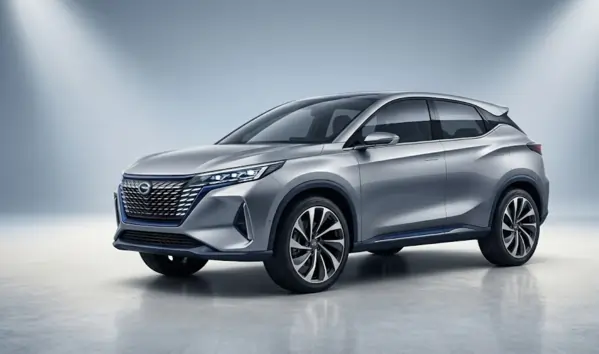
The Next-Gen Platform: Solving the Space Equation
For a long time, the existing version of the sub-compact crossover faced one recurring critique from Indian families—limited rear-seat legroom. Because the current vehicle underpins the older K2 architecture, space maximization inside the cabin remained structurally constrained. However, Kia’s engineers have formally addressed this limitation by migrating the upcoming 2027 model to a completely new structural foundation.
The upcoming model will be built on the advanced K1 modular platform, a highly scalable architecture that also underpins the upcoming Kia Syros. The most significant advantage of this platform shift is a structural increase in dimensions. Specifically, the K1 platform boasts a 20mm longer wheelbase compared to the outgoing architecture. While 20mm might sound minor on paper, in the sub-four-meter segment, it translates directly into a substantially larger cabin. Rear-seat passengers will finally enjoy superior knee room, enhanced thigh support, and a far more comfortable traveling experience during long-distance highway journeys.
Next-Generation Electrical Architecture and Smart Features
The shift to the modern K1 platform unlocks massive potential for high-tech digital integrations. The new architecture supports an advanced Electrical and Electronic (E&E) network. This allows the vehicle to process complex data streams effortlessly, paving the way for advanced software-driven features that were previously reserved only for luxury segments.
Seamless Digital Integrations
- Over-The-Air (OTA) Updates: Owners will no longer need to visit service centers for map updates or infotainment tweaks; the car will automatically download system patches over the cloud.
- Remote Advanced Diagnostics: The E&E system can monitor the health of critical engine and hybrid components in real-time, proactively alerting the owner through a smartphone application before a mechanical fault occurs.
- Enlarged Infotainment Screen: The cabin is expected to ditch the old layout in favor of a massive, continuous dual-screen setup housing a 12.3-inch touchscreen alongside a fully digital driver’s display.
Level 2 ADAS: Safety Takes Center Stage
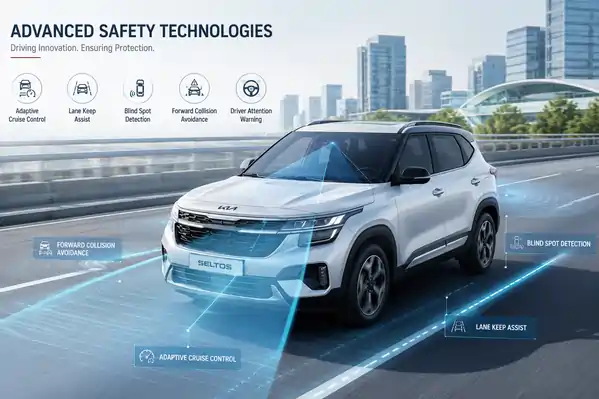
Safety has rapidly evolved into a primary deciding factor for car buyers across metro and tier-2 cities in India. To stay ahead of its immediate rivals, Kia is heavily planning to democratize high-end safety systems by installing a comprehensive Level 2 Advanced Driver Assistance System (ADAS) suite into the new vehicle.
Driven by multiple radar sensors and high-resolution cameras, the Level 2 ADAS setup will provide active safety interventions. Drivers can expect smart features like Adaptive Cruise Control with Stop-and-Go functionality, Lane Keeping Assist, Blind Spot Monitoring, and Autonomous Emergency Braking. When combined with a stronger, high-tensile steel body shell and six standard airbags, the next-gen sub-compact SUV aims to secure a flawless five-star safety rating, building immense trust among safety-conscious family buyers.
Retaining the Power of Choice: Conventional Engine Options
While the long-term roadmap heavily emphasizes electrification, Kia knows that a significant portion of the Indian market still relies on conventional powertrains due to varying budgets and regional driving requirements. Therefore, the 2027 line-up will gracefully retain its highly proven internal combustion engines (ICE), offering an unparalleled power of choice to consumers.
The entry-level variants will continue to utilize the reliable 1.2-litre naturally aspirated petrol engine, generating a balanced 83PS of power and 115Nm of torque, making it a perfect tool for urban commuting. For performance enthusiasts, the spirited 1.0-litre three-cylinder Turbo Petrol engine will remain on duty, pushing out an exciting 120PS of power and 172Nm of torque. Furthermore, defying the industry trend of axing small capacity diesel burners, Kia will keep the highly frugal 1.5-litre CRDi diesel engine alive, offering excellent highway fuel efficiency and a robust 120PS output for heavy mile-munchers. Transmission options will remain incredibly diverse, spanning across a 5-speed manual, 6-speed intelligent Manual Transmission (iMT), a torque-converter 6-speed automatic, and a lightning-fast 7-speed Dual-Clutch Transmission (DCT).
The Hybrid Masterstroke: Arriving by 2028-2029
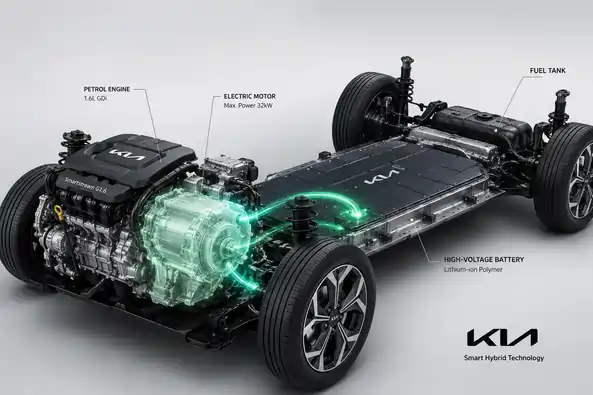
The true piece of resistance for this upcoming model will be its localized strong hybrid powertrain. Kia Global has already confirmed a massive electrification roadmap for developing markets, starting with the launch of the premium Sorento 7-seater SUV and the updated Seltos Hybrid in mid-2027. The core engineering strategy involves electrifying their highly successful, locally manufactured 1.5-litre naturally aspirated petrol engine by pairing it with a compact electric motor and a high-voltage lithium-ion battery pack.
Once this strong hybrid system stabilizes in higher-tier products, Kia plans to scale it down to fit the next-generation compact SUV by late 2028 or early 2029. By utilizing an intelligent electronic drive system, the vehicle will be capable of running entirely on electric power during low-speed bumper-to-bumper city traffic, seamlessly switching to the petrol engine on open highways. This hybrid masterstroke will allow the vehicle to deliver an astonishing real-world fuel economy of over 25 to 28 kilometers per liter, completely eliminating the running-cost anxieties associated with traditional city driving. Once launched, it will officially hold the crown as Kia’s most affordable hybrid vehicle in India.
Conclusion
The evolution of the sub-compact SUV segment reflects the maturity of the Indian consumer. The days of sacrificing cabin comfort for premium features or choosing fuel efficiency over safety are long gone. By utilizing the longer K1 platform, integrating life-saving Level 2 ADAS, and mapping out a localized strong hybrid powertrain, Kia is perfectly positioning its upcoming next-gen vehicle to dominate the mass-market ecosystem.
While conventional petrol and diesel models will initially hit the roads in 2027, the impending arrival of the highly localized hybrid variants by 2028 will reshape segment economics entirely. It proves that the future of the mass-market Automobile sector isn’t just about going electric; it is about delivering smart, efficient, and highly accessible hybrid mobility to every middle-class Indian household.
What are your thoughts on Kia’s upcoming compact hybrid SUV strategy? Would you wait for a localized strong hybrid model over a conventional petrol variant to save on fuel costs? Let us know your perspective in the comments section below!
Frequently Asked Questions (FAQs)
Q1: What is the expected launch timeline for the next-generation Kia Sonet in India?
The conventionally powered petrol and diesel variants of the next-generation model (codenamed QY2E) are expected to make their official debut in the first half of 2027, followed by the highly anticipated strong hybrid variants around late 2028 or early 2029.
Q2: How will the new K1 platform improve the cabin space compared to the current model?
The new K1 platform features a 20mm longer wheelbase than the current K2 architecture. This extra length is directly used to maximize the cabin geometry, providing significantly improved rear-seat legroom and overall passenger comfort.
Q3: Will the upcoming Kia compact hybrid SUV require external plug-in charging?
No, Kia is developing a self-charging strong hybrid system. The vehicle will automatically charge its internal lithium-ion battery pack through regenerative braking and by utilizing the surplus power generated by the petrol engine during normal driving.
Q4: Is the diesel engine option being discontinued for the 2027 model?
No, unlike many competitors who have completely abandoned diesel technology, Kia India will continue to offer the highly reliable and fuel-efficient 1.5-litre CRDi diesel engine alongside its petrol and upcoming hybrid powertrains.
Q5: What are the expected safety upgrades coming to the new model?
Apart from structural reinforcements enabled by the K1 platform, the premium variants of the upcoming SUV are highly expected to introduce a camera-and-radar-based Level 2 ADAS suite, offering active collision avoidance, lane keep assist, and emergency braking systems.