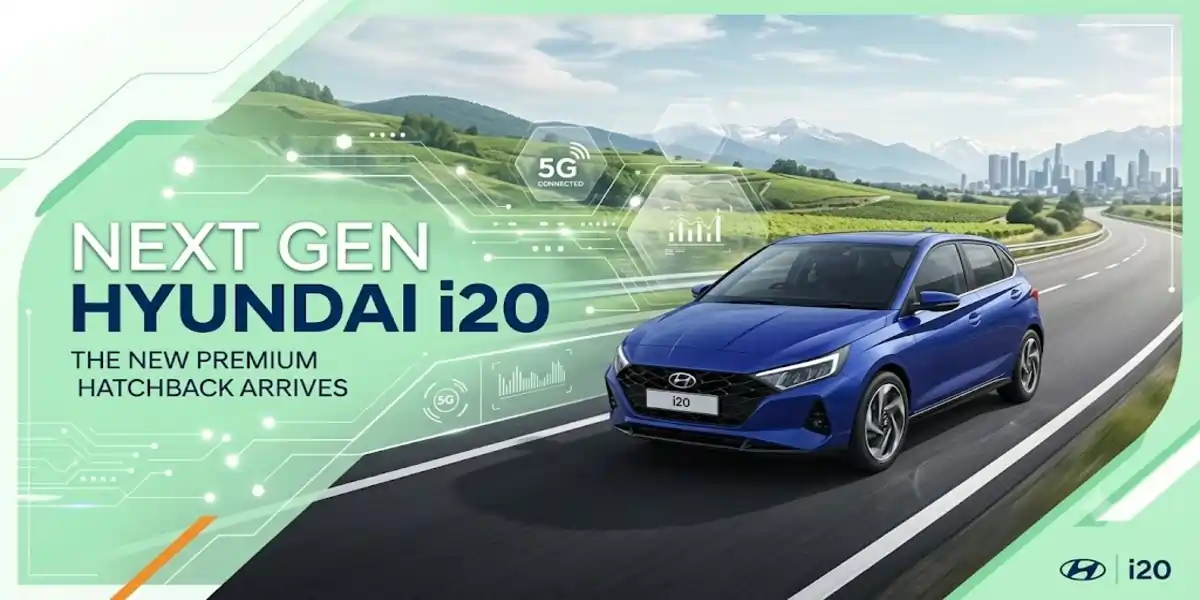
The premium hatchback segment is experiencing a massive shift as consumer expectations lean heavily toward bold road presence, cutting-edge software integration, and fuel-flexible powertrains. For over a decade, the Hyundai i20 has remained a benchmark for style and comfort in urban car markets worldwide. Now, the global Automobile industry has received a fresh jolt with the official international unveiling of the highly anticipated, fourth-generation Hyundai i20. Debuting first in the competitive South American market, this premium vehicle sets an entire new trajectory for compact family cars.
Following a series of viral image leaks that kept car enthusiasts on the edge of their seats, Hyundai completely pulled the wraps off its updated hatchback. The latest iteration completely reworks the vehicle’s design philosophy, stepping away from low-slung profiles to introduce rugged, commanding visual signatures. From an updated structural platform to a highly digitized, modern cabin architecture, the fourth-generation model aims to disrupt established segments. Let’s explore exactly what this model brings to the table.
Evolution of Exterior Design: Combining Hatchback Utility with SUV Road Presence
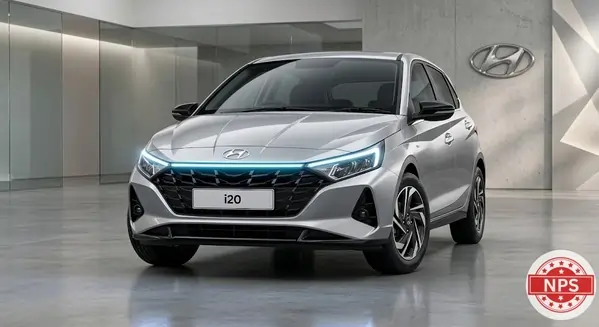
When analyzing changes in the modern Automobile landscape, a key trend stands out: consumers love the high-riding look of SUVs. Hyundai’s engineering and styling departments have taken note, applying a distinctive, aggressive design approach to the fourth-generation i20 while retaining its iconic hatchback proportions.
The front end is dominated by an ultra-modern, full-width horizontal LED light bar that bridges a pair of sharp, arrow-shaped projector headlamps. Adding to this evening signature are distinct Y-shaped LED Daytime Running Lights (DRLs) embedded into a redesigned, sculpted bumper configuration. Moving along the side profile, the wheel arches are flared to accommodate striking new 17-inch dual-tone diamond-cut alloy wheels. At the rear, the vehicle features connected geometric tail-lamps seamlessly integrated into clean, triangular housings, drastically increasing visual width when viewed from behind.
Architectural Dimensions and the Advanced K3 Platform
Underneath the premium sheet metal, the fourth-generation i20 migrates to Hyundai’s advanced K3 modular platform. This structural upgrade optimizes space management, chassis rigidity, and crash safety metrics across the board.
Key Dimensions Breakdown:
- Total Exterior Length: 4,130 mm (providing a longer, more stable footprint)
- Chassis Width: 1,780 mm (translating directly to superior shoulder room inside)
- Total Height: 1,495 mm (balancing low aerodynamic drag with comfortable headroom)
- Wheelbase Length: 2,580 mm (maximizing passenger legroom in the rear row)
- Luggage Trunk Capacity: 346 liters (offering deep, highly practical storage space for family road trips)
A Major Overhaul Inside: The New Standard for Premium Cabins
Stepping inside the fourth-generation premium hatchback reveals a space that completely redefines expectations for cars in this price bracket. Hyundai has discarded the cluttered buttons of old, choosing a clean, minimalist layout that mirrors luxury segment cars.
The star of the updated dashboard architecture is an elegant, sweeping curved display unit. This high-resolution glass housing integrates both the fully digital instrument cluster for the driver and the responsive infotainment touchscreen system into a single fluid panel. The multi-media software supports wireless Apple CarPlay, Android Auto, and over-the-air (OTA) updates. Drivers will also notice a premium, tactile three-spoke steering wheel outfitted with integrated audio, cruise control, and voice assistant toggles.
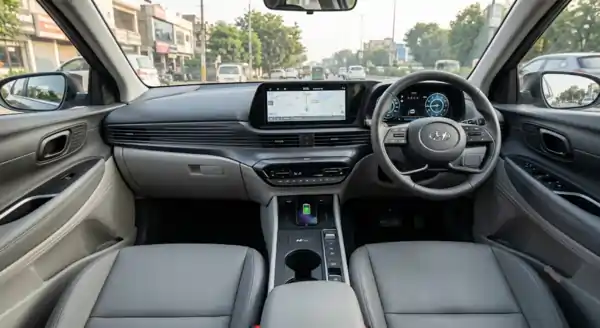
Premium Cabin Textures and Practical Comfort Amenities
Material quality inside the cabin has received a significant upgrade. The entire dashboard and door card layout are finished in a refined, low-reflection dual-tone grey color theme, making the cabin feel bright and open.
The anatomically sculpted seats are wrapped in premium, two-tone leather upholstery that offers excellent side bolster support for spirited driving maneuvers. In terms of daily usability, the center console features a dedicated wireless smartphone charging pad with active cooling, a sliding front center armrest with deep storage, and neatly integrated, adjustable dual cup holders for morning coffee commutes.
Advanced Flex-Fuel Powertrains Built for the Future
As eco-conscious policies grow more strict across the international Automobile market, alternative fuel solutions are more important than ever. For its initial global launch in Brazil, the fourth-generation i20 debuts an advanced lineup of flex-fuel engines designed to run seamlessly on petrol, ethanol, or any blend of the two.
The 1.0-Litre Naturally Aspirated Engine (Entry-Level Variant)
Targeting daily city commuters who prioritize low maintenance and high fuel economy, the baseline trims are equipped with a refined 1.0-litre, three-cylinder naturally aspirated flex-fuel motor. This engine is mated exclusively to a crisp, short-throw 5-speed manual transmission.
- When Running on Standard Petrol: It develops a reliable 74 bhp and 92 Nm of maximum torque.
- When Running on Pure Ethanol: The performance metrics automatically scale up to 79 bhp and 100 Nm of torque, utilizing ethanol’s higher octane rating to deliver punchier low-end acceleration.
The 1.0-Litre Direct-Injection Turbocharged Engine (High-Performance Variant)
For drivers who want effortless highway performance and immediate throttle response, the premium trims introduce a high-tech 1.0-litre direct-injection turbocharged flex-fuel engine. This engine works alongside a smooth-shifting 6-speed automatic torque converter transmission.
This turbo setup pumps out a robust 113 bhp and an impressive 172 Nm of peak torque. A key engineering achievement for this engine is its performance stability: Hyundai’s advanced engine control unit ensures that the motor consistently delivers 113.4 bhp and 171.5 Nm of torque, regardless of whether the tank is filled with E30 petrol, pure biomass ethanol, or an irregular mix of both fuels.
Safety Systems and Global Market Implications
While the vehicle is making its initial commercial waves in South America, its mechanical foundations and design choices pave the way for its arrival in other key car markets, including India and Europe. The K3 architecture means the fourth-generation model comes equipped with an expanded suite of advanced safety features.
Standard configurations include six airbags, Electronic Stability Control (ESC), Hill-Start Assist Control (HAC), and Vehicle Stability Management (VSM). Upper-tier variants will deploy a radar-and-camera-based Advanced Driver Assistance System (ADAS). This comprehensive safety layout includes autonomous emergency braking, lane-keeping assist, blind-spot monitoring, and high-beam assist, ensuring top-tier safety scores across global testing bodies.
Conclusion: Setting a High Bar for the Industry
The global reveal of the fourth-generation model proves that the compact premium car market is more vibrant than ever. By blending rugged, SUV-inspired exterior elements with a highly advanced, dual-screen curved interior layout, Hyundai has successfully bridged the gap between premium luxury aesthetics and daily hatchback practicality.
Furthermore, the introduction of highly efficient, high-performance flex-fuel engine options demonstrates a clear commitment to sustainable engineering without sacrificing the driving excitement that enthusiasts love. As this new model prepares to roll out across various global territories over the coming months, competitors will have to work hard to match its well-rounded package. For families and commuters alike, the latest i20 stands out as an incredibly compelling choice for the modern era.
What do you think of the new design direction for the fourth-generation i20? Do you like the bold SUV-inspired light bars, or do you prefer classic hatchback styling? Let us know your thoughts in the comment section below! Don’t forget to share this article with your fellow car enthusiasts.
Frequently Asked Questions (FAQs)
Q1: What is the most significant visual change on the new fourth-generation i20? The most notable evolution is the transition to an SUV-inspired design language, highlighted by a prominent full-width horizontal LED light bar at the front, distinct Y-shaped DRLs, and connected rear geometric tail-lamps.
Q2: What are the exact cabin dimensions and storage capacity of the updated model? Built on the modular K3 platform, the vehicle stretches 4,130 mm long and 1,780 mm wide, riding on a spacious 2,580 mm wheelbase. It also provides a practical 346-liter luggage boot capacity.
Q3: How does the new flex-fuel turbo engine perform on different fuel types? The premium 1.0-litre direct-injection turbocharged flex-fuel engine delivers a highly stable performance output of 113 bhp and 172 Nm of torque, running consistently whether fueled by standard petrol or biomass ethanol.
Q4: Does the new interior feature any advanced display technologies? Yes, the completely overhauled cabin features a clean, premium dashboard layout dominated by a large, integrated curved display housing both the digital driver’s cluster and the infotainment touchscreen system.
Q5: When is the new fourth-generation premium hatchback expected to launch in alternative global markets? Following its initial commercial rollout in Brazil, the fourth-generation model is expected to make its way to alternative Asian and European markets in late 2026 or early 2027.